
Every week, enquiries arrive at our workshop in Garching from buyers across the USA, Japan, Australia, and Europe — all asking the same question: Which one should I buy? The Datsun S30 family spans three distinct models across a decade of production, and choosing between them is not simply a matter of taste. Budget, purpose, and long-term vision all play a role. This guide is our honest answer — written after selling, restoring, and shipping dozens of these cars to buyers around the world.
Let us be direct from the outset: there is no bad choice here. The 240Z, 260Z, and 280Z share the same fundamental architecture — Yoshihiko Matsuo's timeless fastback silhouette, a twin-cam inline-six, independent suspension all round, and that extraordinary driving character that made the S30 a landmark in automotive history. The differences between them, however, are meaningful enough to make the right choice matter considerably over a five or ten-year horizon.
"The question is never simply which S30 is best. The question is which S30 is best for you — and those are very different things."
Bavaria Sports Cars, MunichThe Models, Briefly Explained
Nissan launched the S30 in Japan in October 1969 as the Fairlady Z, and in North America as the Datsun 240Z. The name referred to the engine displacement: a 2.4-litre straight-six known as the L24. It was an immediate sensation — here was a Japanese sports car that matched European exotics in looks and dynamics, at a fraction of the price.
By 1974, tightening US emissions regulations forced Nissan to bore the engine out to 2.6 litres, creating the L26 unit of the 260Z. The chassis remained virtually identical, but the car gained slightly revised bumpers and interior fittings to meet evolving federal safety standards. Production ran for just two model years — 1974 and 1975 — making the 260Z the rarest of the three variants.
The 280Z arrived for the 1975 model year, growing to a 2.8-litre L28 engine and, crucially, adopting Bosch mechanical fuel injection in place of the twin SU or Hitachi carburettors of its predecessors. It also introduced a longer wheelbase 2+2 variant alongside the standard two-seat body. Production continued through 1978, when it was replaced by the substantially heavier S130 generation.
Side-by-Side Comparison
| Category | 240Z 1969–73 | 260Z 1974–75 | 280Z 1975–78 |
|---|---|---|---|
| Engine | L24 2.4L inline-six | L26 2.6L inline-six | L28 2.8L inline-six |
| Fuel System | Twin SU / Hitachi carbs | Twin Hitachi carbs | Bosch mechanical fuel injection |
| Power (std) | ~151 hp (US-spec) | ~139 hp (US-spec) | ~170 hp (EU / JDM-spec) |
| Production Volume | ~170,000 units | ~83,000 units (rarest) | ~170,000+ units |
| Collector Value | ★★★★★ Highest | ★★★☆☆ Rising | ★★★★☆ Strong |
| Parts Availability | Good – specialist sourcing | Moderate – shares many parts | Excellent – widest support |
| Drivability | Raw, rewarding, demanding | Similar to 240Z | Most refined, easiest daily |
| Entry Price (Europe) | €45,000 – €90,000+ | €45,000 – €85,000 | €45,000 – €85,000 |
| 2+2 Available? | No | Yes (from 1974) | Yes |
| Best For | Investment, concours, prestige | Value, enjoyment, smart buy | Driving, reliability, versatility |
The Models in Depth
Datsun 240Z
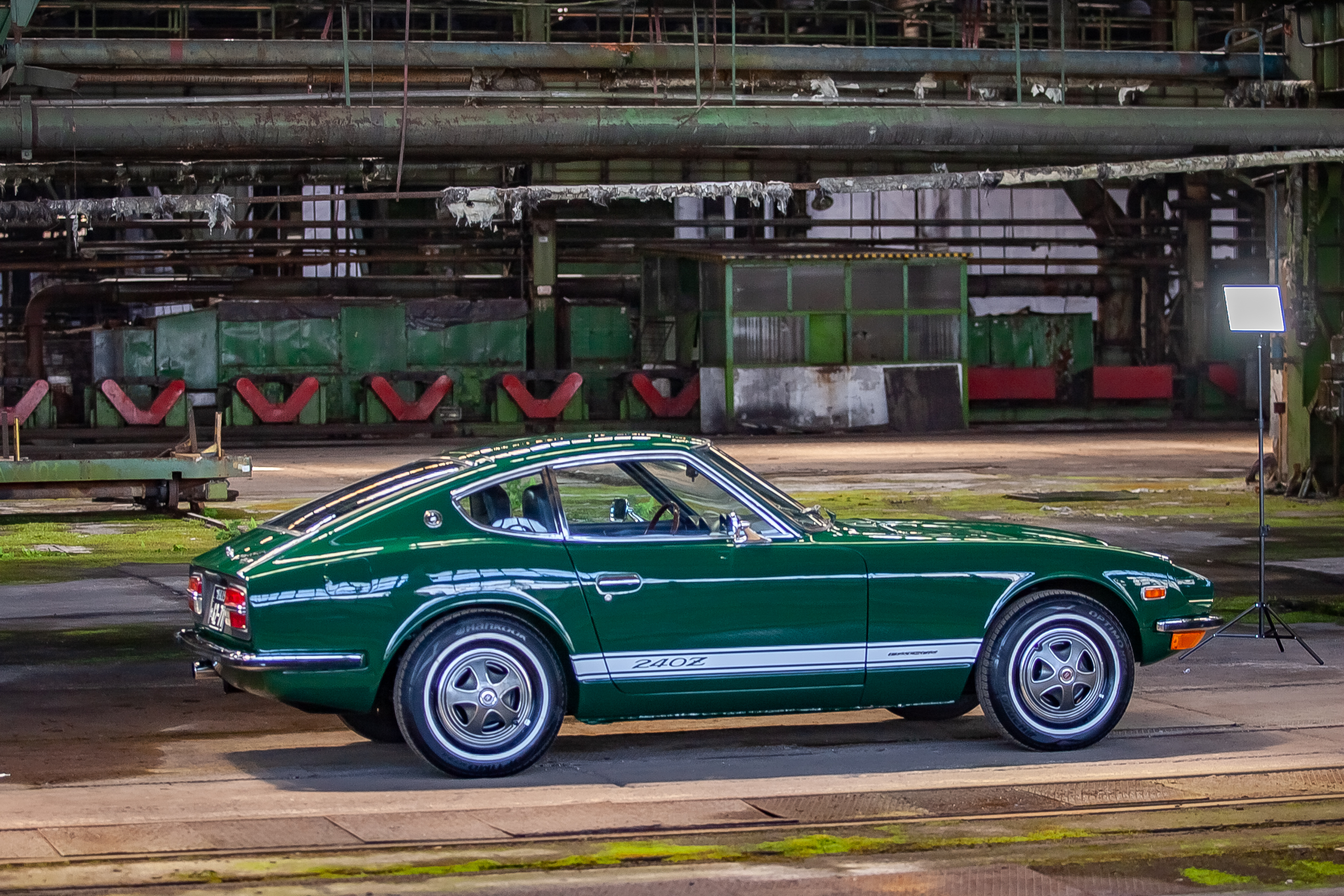
The 240Z is the car that started everything, and the market prices it accordingly. Early production examples — particularly Series 1 cars built before 1971 — are among the most desirable Japanese classics in existence, rivalling the earliest Porsche 911s in terms of collector interest and investment trajectory.
What makes the 240Z so special is not simply age. It is the purity of the original concept, untouched by the emissions compromises and federalisation changes that gradually softened its successors. The L24 twin-carburettor engine, in a well-maintained example, is responsive and characterful in a way that genuinely rewards the driver. The steering is more direct, the body marginally lighter, and the overall driving experience closer to a proper sports car than anything Japan had previously produced at this price level.
The investment case is straightforward: low-mileage, numbers-matching 240Zs have consistently appreciated above inflation over the past decade, and the trajectory shows no sign of reversal. If your primary consideration is long-term value, or if you intend to show the car concours, the 240Z is the answer. Be prepared, however, for a premium price, and accept that the oldest examples will require more careful maintenance and specialist knowledge than the later cars.
Datsun 260Z
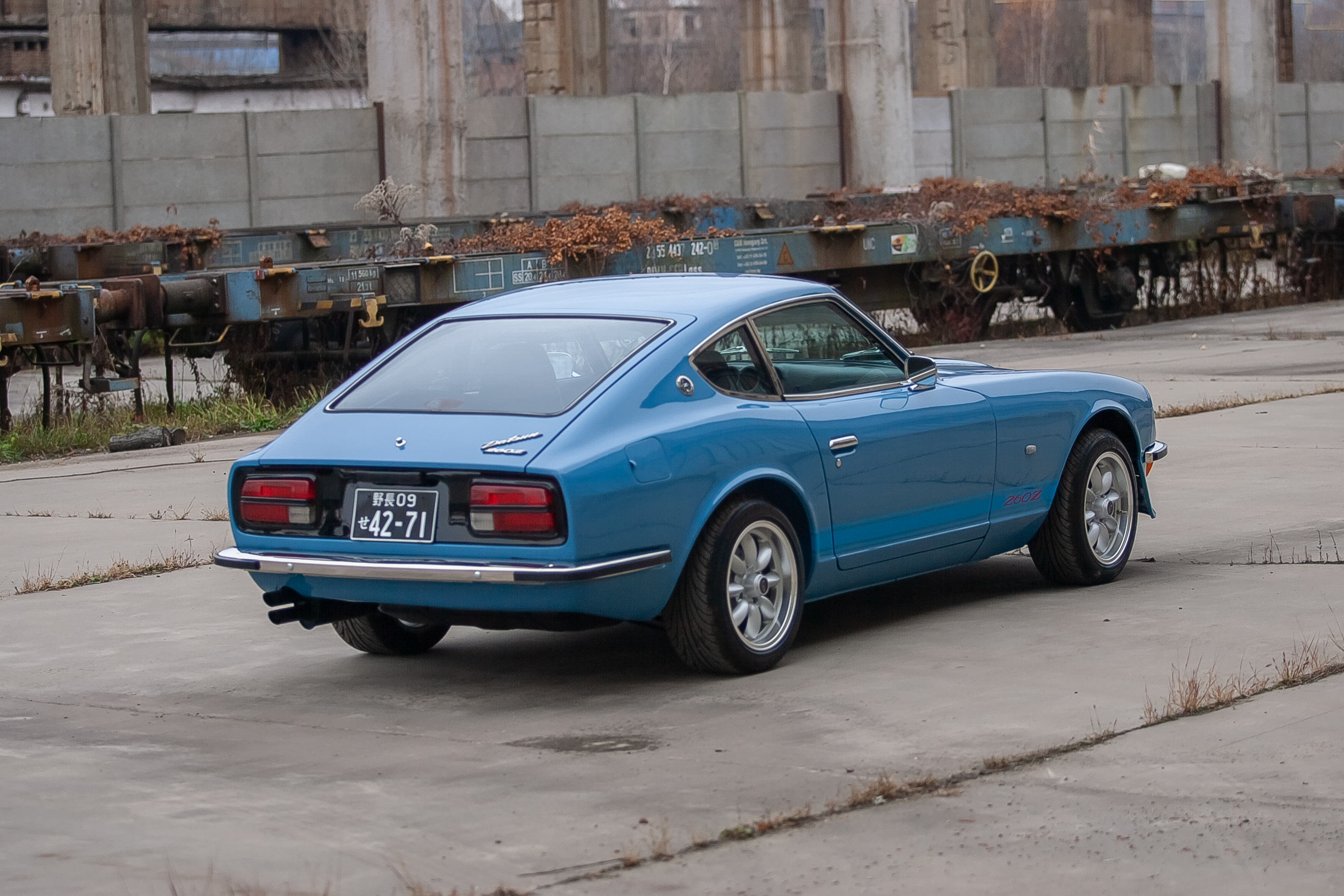
The 260Z occupies a peculiar position in the market — one that represents a genuine opportunity for the informed buyer. Produced for just two model years, it is actually the rarest of the three S30 variants, yet it has historically traded at a discount to the 240Z simply because of the collector market's fixation on the original model designation.
In practice, the 260Z is nearly indistinguishable from the 240Z in character and driving experience. The L26 engine is a straightforward bore-out of the L24, the chassis is the same, the interior is broadly similar, and the silhouette is — to the untrained eye — identical. The slight power deficit of the US-spec emission-tuned engine is largely irrelevant in normal use, and many 260Z owners will tell you the car drives just as well as the 240Z it closely resembles.
From a value perspective, the 260Z has been quietly appreciating as more buyers recognise its rarity and essential similarity to the 240Z. We expect this gap to continue narrowing. For a buyer who wants genuine S30 ownership — the same driving experience, the same visual drama, the same fundamental car — at a meaningfully lower entry price, the 260Z may be the most rational choice in the entire S30 range right now.
Datsun 280Z
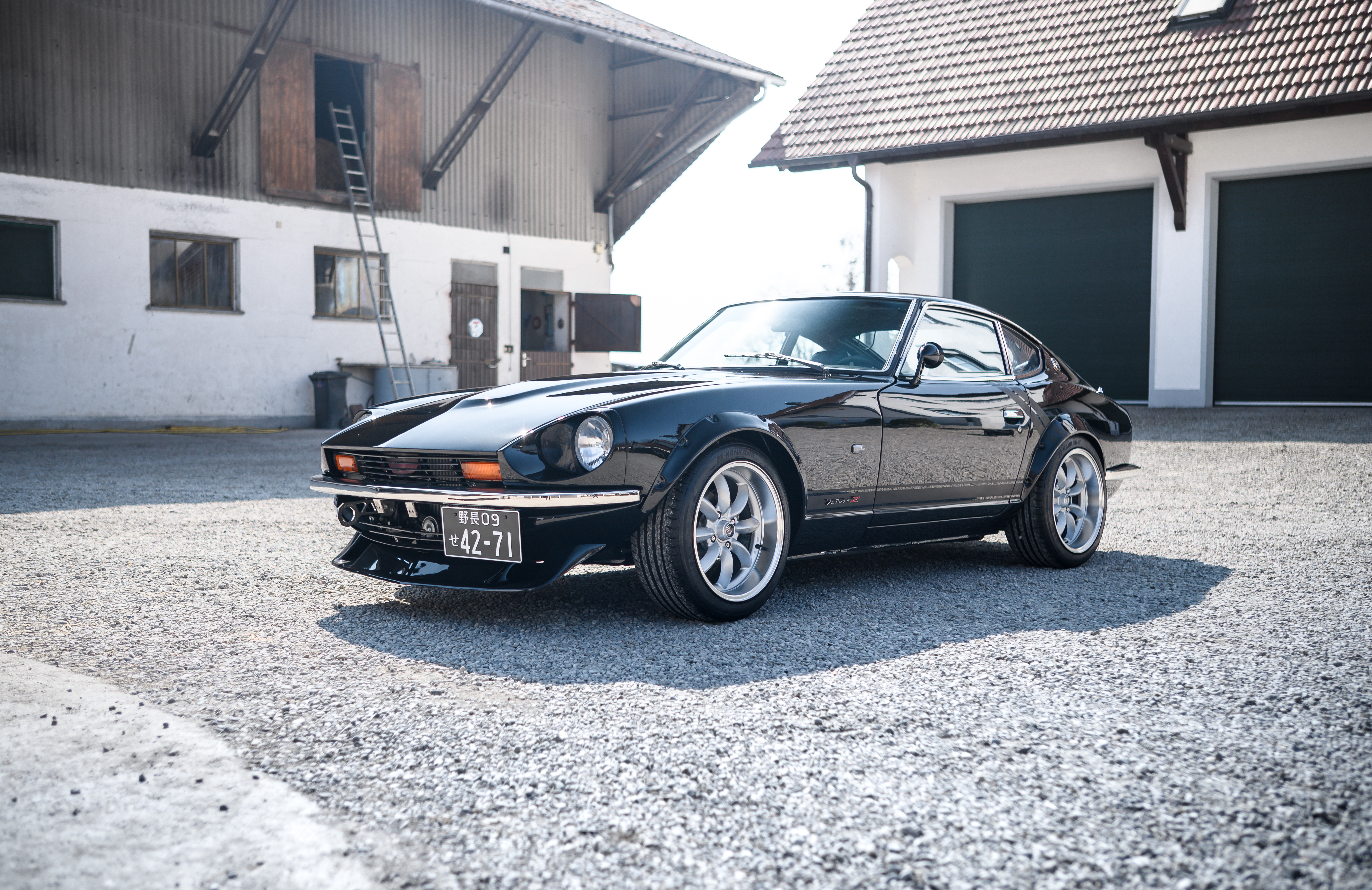
The 280Z is the S30 that Nissan got most right from a mechanical standpoint, and for buyers whose primary interest is driving rather than showing, it may be the most satisfying choice. The introduction of Bosch fuel injection transformed the car's everyday usability — cold starts are reliable, throttle response is linear, and fuel economy is measurably better than the carburetted cars.
The L28 engine, displacing 2.8 litres, produces the most torque of any factory S30 engine. In European and Japanese domestic market specification — where emissions regulations were less restrictive than in the United States — output was considerably higher than the heavily detuned US figures suggest. A well-sorted 280Z is a genuinely rapid car by any standard, and one that rewards enthusiastic driving without the carburettor tuning demands of the earlier models.
Parts availability for the 280Z is the best of the three variants, owing to its larger production numbers and broader aftermarket support. The fuel injection system, while occasionally misunderstood, is actually robust and well-supported — many technicians experienced in classic European fuel injection can work on it competently. The 280Z also offers the unique advantage of the 2+2 body, which adds 305mm to the wheelbase and provides occasional rear-seat accommodation without fundamentally altering the car's character.
Category Ratings
Which One Is Right for You?
Buy the 240Z if you…
- Want the highest long-term investment ceiling
- Plan to show the car at concours events
- Value prestige and historical significance above all
- Have specialist access for classic carburettor maintenance
- Are seeking a numbers-matching, documented example
Buy the 260Z if you…
- Want the 240Z experience at a lower entry price
- Are an informed buyer comfortable with a less-recognised model
- See value in owning the rarest S30 variant
- Want a car that will likely appreciate as 240Z awareness grows
- Need a 2+2 body with the early S30 character
Buy the 280Z if you…
- Want to drive your S30 regularly, not just display it
- Prioritise reliability and ease of maintenance
- Are new to classic car ownership
- Want the widest choice of available examples
- Are considering a restomod or engine swap project
Consider the 2+2 if you…
- Occasionally need rear-seat space
- Prefer the longer, more elegant roofline profile
- Want a rarer S30 body style at no premium
- Plan a touring or long-distance ownership experience
- Value uniqueness over two-seat S30 orthodoxy
What to Look for When Buying Any S30
Whichever model you choose, the condition of the body is the most important single factor in any S30 purchase. These cars were not galvanised at the factory, and the floor pans, sill sections, inner wheelarches, and rear chassis rails are the first places corrosion takes hold. A structurally compromised S30 is a significant restoration project regardless of the engine's condition — always prioritise a rust-free body over an impressive engine.
Numbers matching matters enormously for investment-grade examples. The engine number, body number, and any surviving build documentation should be verified against manufacturer records wherever possible. For the 240Z in particular, a documented, numbers-matching example commands a substantial premium over an equivalent car with an engine swap — and rightly so.
For the 280Z, pay attention to the condition of the Bosch fuel injection system. The CIS (Continuous Injection System) is reliable when maintained correctly, but has been mistreated on many surviving examples by well-intentioned owners who replaced it with carburettors. A correct, functioning EFI 280Z is preferable to a modified car from both a value and authenticity standpoint.
"A rust-free body with a tired engine is always preferable to a fresh engine in a compromised shell. The body defines the car. The engine is a part."
Bavaria Sports Cars Workshop, Garching bei MünchenFinally, regardless of which model you are purchasing, arrange an independent Pre-Purchase Inspection if you are buying from overseas or at distance. We welcome PPI visits at our facility — transparency is a principle we apply to every car we sell, not a concession we make reluctantly.
The Datsun S30 in any variant is one of the great bargains remaining in the classic car world — a car of genuine historical importance, extraordinary visual appeal, and real driving pleasure, available at prices that remain accessible compared to its European contemporaries. The question of which variant to choose is ultimately a question of purpose: invest, enjoy, or both. All three answers are valid. All three cars will reward you.